Dr. Habiba Rashid
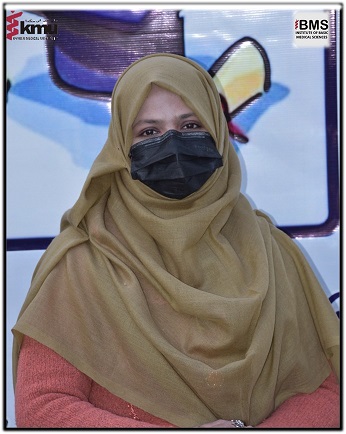
Biography
I have earned my Bachelor's degree in Biotechnology from the University of Peshawar in 2010 and an M.Phil. in Virology and Immunology from the National University of Sciences and Technology Islamabad Pakistan in 2012. Ph.D. in Applied Biosciences (Neuroscience) from the National University of Sciences and Technology (NUST) Islamabad in 2018
I am assistant professor at Anatomy department, IBMS. I am actively involved in postgraduate teaching and research supervision, including the supervision of M.Phil. and Ph.D. students. In addition to my academic responsibilities, I have extensive administrative and academic service experience. I have served as the focal person for weekly research symposia, institutional focal person for Quality Enhancement Cell (QEC) activities, and as a member of ASCON’20 virtual conference & BMedCon’23 organizing committee. I have served as an editorial member for the first edition of the BMS newsletter. I am focal person for Anatomy department, resource person and facilitator for regular workshops on laboratory animal handling.
Research Interests
Research Statement My research focuses on understanding how stress (early life stress), injury, and environmental exposures influence brain function, behaviour, and systemic organ health, with particular emphasis on the anatomical, biochemical, histological, and pharmacological mechanisms underlying these effects. I use mouse and rat models as experimental platforms, integrating behavioural assessment with anatomical, histological, biochemical, and pharmacological approaches to investigate structural and functional changes. A major area of my research is the neurobehavioral consequences of stress and injury, particularly memory and cognitive behaviour. My published work has investigated the influence of sex and muscarinic activity on memory retrieval following traumatic brain injury, contributing to understanding the biological and cholinergic mechanisms that influence cognitive outcomes after neural injury. My ongoing research builds on this work by investigating the effects of early-life stress on memory and behaviour, including the underlying anatomical and neurobiological alterations and potential pharmacological treatment strategies. Behavioral paradigms in mice and rats are combined with biochemical and histological assessments to establish relationships between brain changes and behavioural outcomes. Another research direction examines the systemic effects of hepatic ischemia-reperfusion injury. My ongoing studies investigate its impact on the central nervous system, renal system, and urogenital system, aiming to understand the mechanisms underlying remote organ dysfunction and failure through integrated anatomical, histological, biochemical, and functional assessments. Overall, my research seeks to establish mechanistic links between stress, structural and biochemical alterations, and functional behavioural outcomes, while identifying potential therapeutic approaches. My long-term interests include early life stress-related cognitive dysfunction, neurodevelopment, brain–organ interactions, sex-specific responses to injury, and translational biomedical research using mouse and rat models.Publications
- Andleeb S., In silico drug repurposing via chemical-protein interaction analysis, a proof-of-concept study: targeting pyocyanin based virulence of antibiotic resistant Pseudomonas aeruginosa — 9. Rashid M. I., Tariq P., Rashid H., Ali A., Andleeb S., , International Journal of Biosciences (2018)
- Role of cholinergic receptors in memory retrieval depends on gender and age of memory — Rashid H, Mahboob A, Ahmed T. , Behavioural Brain Research (2017)
- Gender dependent contribution of muscarinic receptors in memory retrieval under sub-chronic stress — Rashid H and Ahmed T. , Neuroscience Letters (2018)
- Muscarinic activity in hippocampus and entorhinal cortex is crucial for spatial and fear memory retrieval — Rashid H and Ahmed T. , Pharmacological Reports (2019)
- Gender Dimorphic Effect of Dopamine D2 and Muscarinic Cholinergic Receptors on Memory Retrieval — Rashid H and Ahmed T. , Psychopharmacology (2021)
- Evaluation of Blood-Brain-Barrier Permeability, Neurotoxicity, and Potential Cognitive Impairment by Pseudomonas aeruginosa’s Virulence Factor Pyocyanin — Rashid, M. I., Rashid, H., Andleeb, S., & Ali, A. , Oxidative medicine and cellular longevity (2022)
- Influence of Sex and Muscarinic Activity on Memory Retrieval in Mouse Model of Traumatic Brain Injury — Rashid, H., & Ahmed, T. , Brain Sciences (2023)
- Insight Into Use and Safety of Mosquito Repellents; An Online Survey — ul Ain, Q., Huma, Z., Hassan, W., & Rashid, H , Advances in Basic Medical Sciences (2024)
- Inflammatory effects of commercial and natural mosquito repellents on respiratory system in male and female mice — Ain, Q. U., Huma, Z., & Rashid, H , Journal of Taibah University Medical Sciences (2026)